What is Differential Scanning Calorimetry (DSC)?
Understanding the Science of Heat Flow
Differential Scanning Calorimetry (DSC) is a thermoanalytical technique used to measure how a material’s physical properties change along with temperature and time. In simpler terms, it measures how much energy (heat) a sample absorbs or releases as it is heated, cooled, or held at a constant temperature
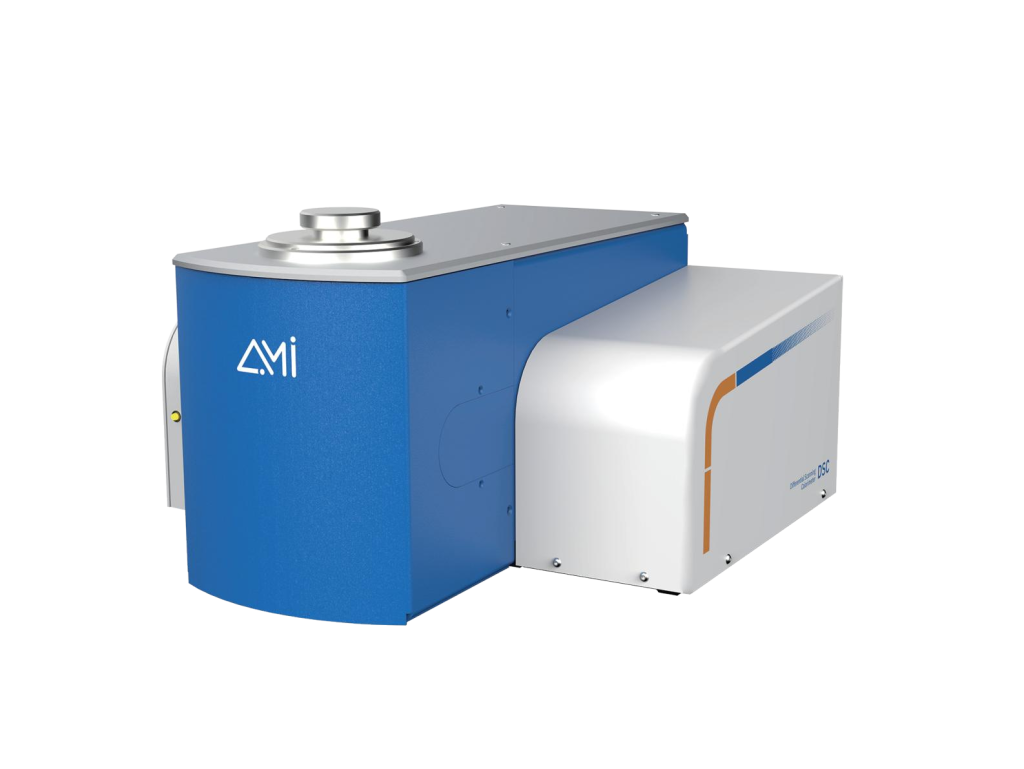

How Does DSC Work?
The fundamental principle of DSC is based on comparing a sample and a reference. Both are placed in a furnace and heated (or cooled) at a controlled rate.
The fundamental principle of DSC is based on comparing a sample and a reference. Both are placed in a furnace and heated (or cooled) at a controlled rate.
- The Setup: The sample (enclosed in a small pan) and an empty reference pan are kept at the same temperature throughout the experiment.
- The Measurement: If the sample undergoes a physical transformation (like melting), it will require more or less heat than the reference to maintain the same temperature. DSC monitors this difference in heat flow.
Key Thermal Events Detected by DSC
When you look at a DSC curve (thermogram), you will typically see peaks and shifts that represent different states of matter:
When you look at a DSC curve (thermogram), you will typically see peaks and shifts that represent different states of matter:
- Glass Transition (Tg): A "step" in the baseline. It represents the temperature where an amorphous material transitions from a hard, brittle state to a soft, rubbery state.
- Crystallization (Tc): An exothermic peak (heat is released). This is where polymer chains or molecules arrange themselves into an ordered structure.
- Melting Point (Tm): An endothermic peak (heat is absorbed). This is the temperature where a solid turns into a liquid.

Why is DSC Important?
DSC is a "must-have" tool in materials science and chemistry because it provides a "thermal fingerprint" of a substance.
DSC is a "must-have" tool in materials science and chemistry because it provides a "thermal fingerprint" of a substance.
- Polymer Industry: To determine the purity and processing temperatures of plastics.
- Pharmaceuticals: To check the stability and shelf-life of drugs.
- Food Science: To study the melting behavior of fats and the gelatinization of starch.
Powered by
MakeWebEasy.com