What is Thermogravimetric Analysis (TGA)?
Exploring Material Stability through Mass Change
Thermogravimetric Analysis (TGA) is a powerful thermal analysis technique used to measure the change in the mass (weight) of a sample as it is heated, cooled, or held at a constant temperature in a controlled atmosphere. It provides critical data regarding the thermal stability, composition, and purity of materials.

The Fundamental Principle
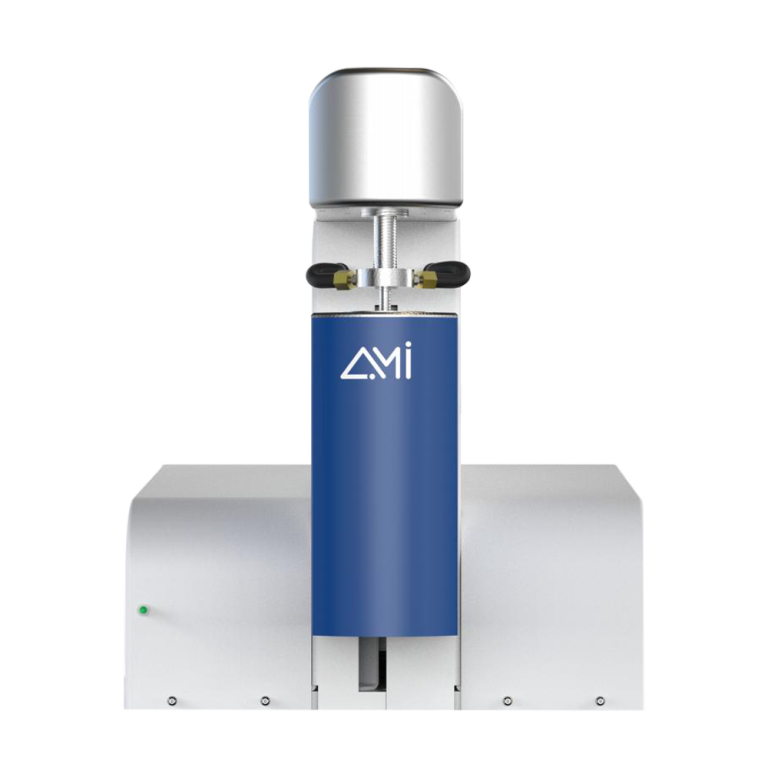
The core of TGA is a highly sensitive microbalance coupled with a high-temperature furnace. As the furnace ramps up the temperature, the balance continuously monitors the sample's weight.
The core of TGA is a highly sensitive microbalance coupled with a high-temperature furnace. As the furnace ramps up the temperature, the balance continuously monitors the sample's weight.
- Weight Loss: Usually indicates processes like evaporation (moisture or solvents), decomposition (breaking of chemical bonds), or reduction.
- Weight Gain: Typically suggests an oxidation reaction where the sample reacts with the surrounding atmosphere (e.g., oxygen).
Key Data: The TGA Curve (Thermogram)
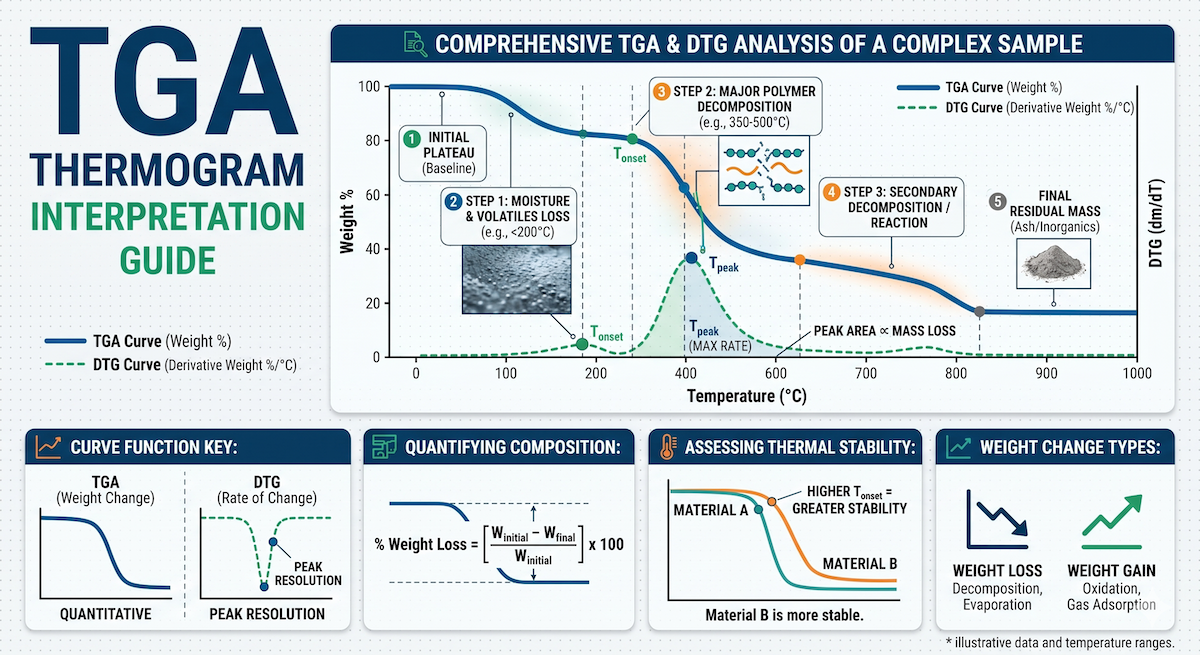
A TGA result is plotted as weight (either in milligrams or as a percentage of the initial weight) on the y-axis against temperature or time on the x-axis.
A TGA result is plotted as weight (either in milligrams or as a percentage of the initial weight) on the y-axis against temperature or time on the x-axis.
- Decomposition Temperature: The point where the material begins to break down.
- Multi-step Degradation: Complex materials or blends often show multiple "steps" in weight loss, indicating different components.
- Residual Mass: The "ash" or inorganic content remaining after all organic components have decomposed.
- Derivative Thermogravimetry (DTG): Often, the first derivative of the TGA curve is plotted to pinpoint exactly where the rate of weight loss is at its maximum.
Strategic Applications
TGA is essential across various industries, complementing other techniques like DSC:
TGA is essential across various industries, complementing other techniques like DSC:
- Polymer Industry: To determine the filler content (like glass fiber or carbon black) and to understand the thermal degradation limits of plastics.
- Pharmaceuticals: To measure moisture content (solvates/hydrates) and ensure the stability of active ingredients.
- Food & Agriculture: To analyze the composition of moisture, fats, and volatile organic compounds.
- Environmental Science: To study the carbon content in soil or the efficiency of catalysts.
Powered by
MakeWebEasy.com